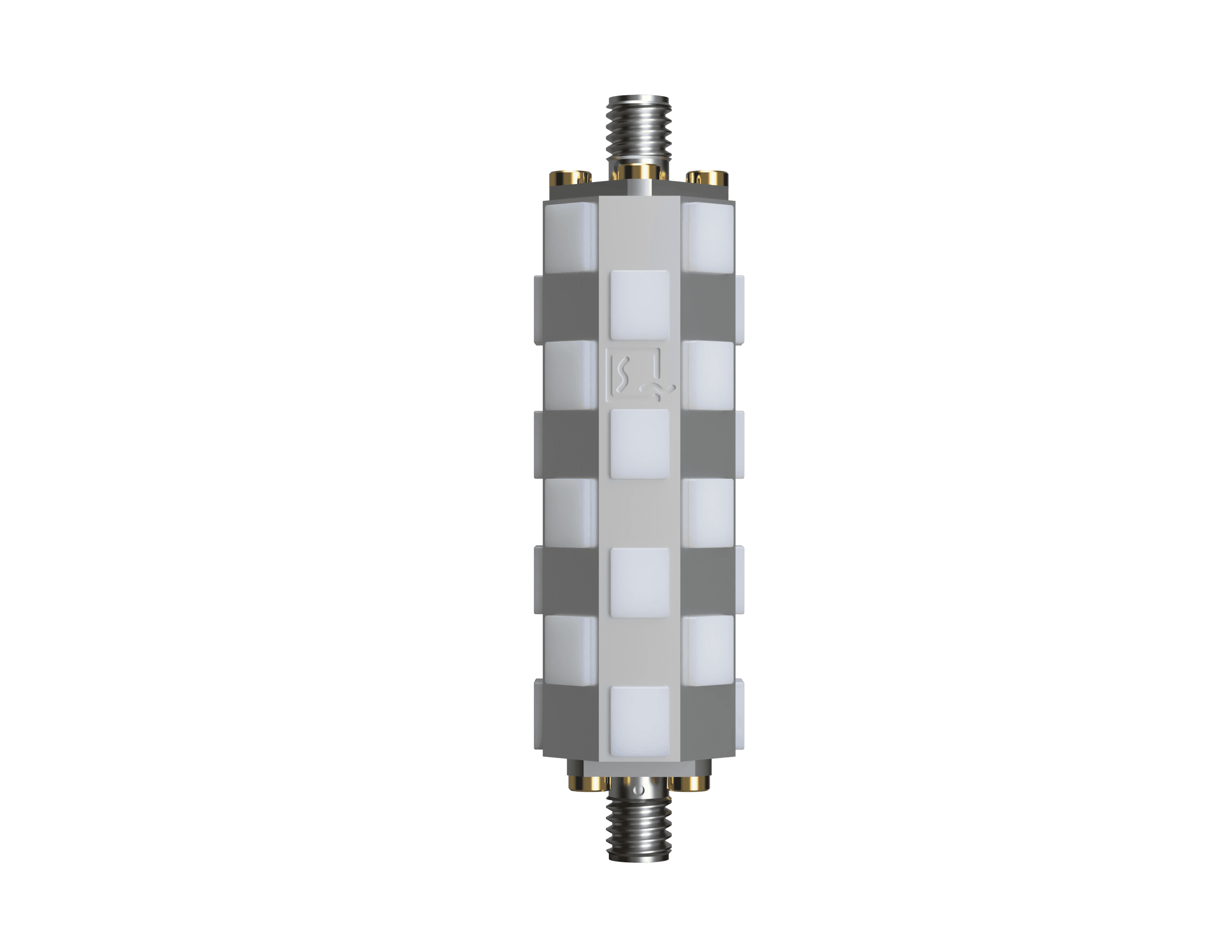
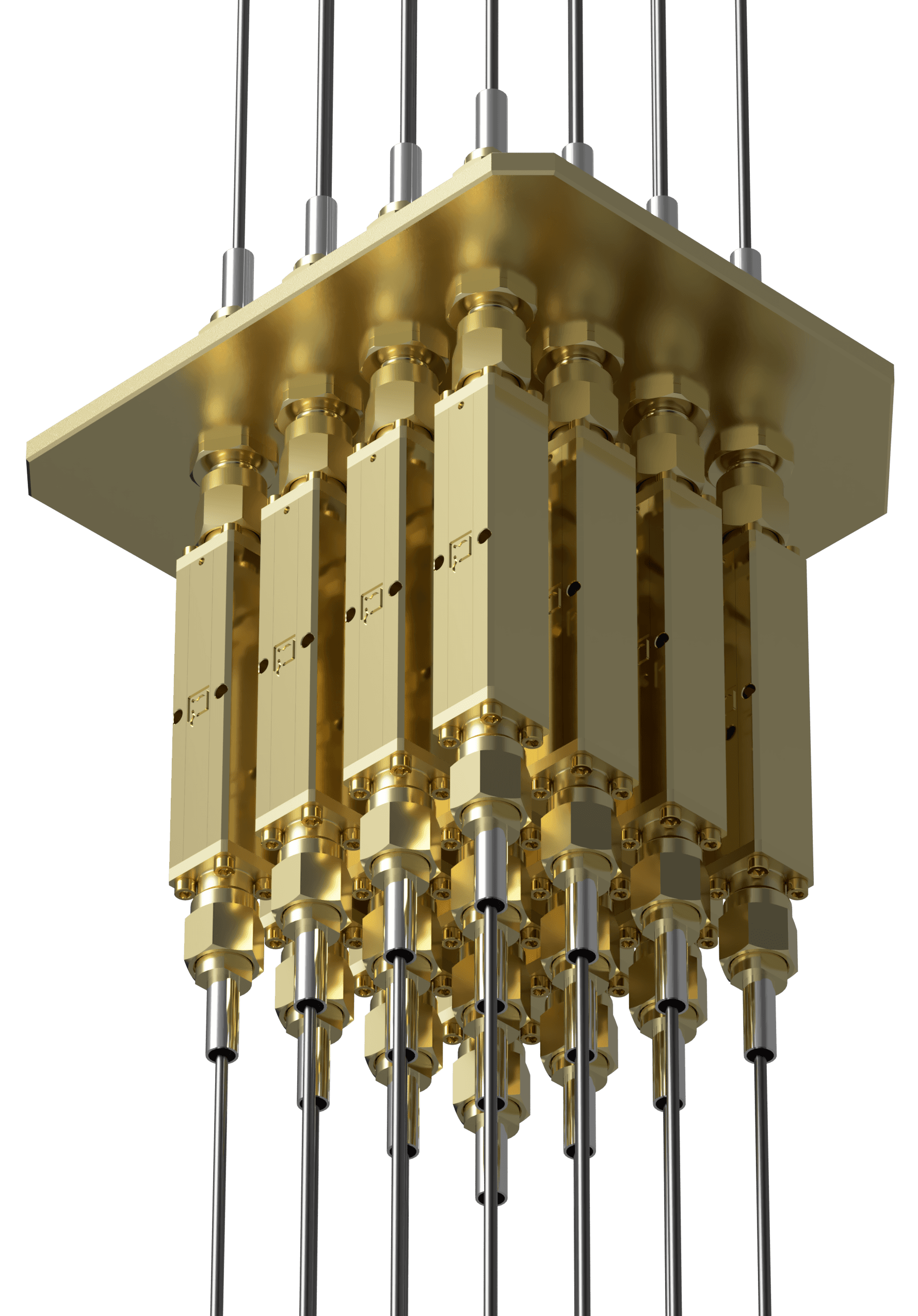
What changed from HERD-1 to HERD-2
Both generations work the same way: a leaky coaxial waveguide drains Cooper-pair-breaking radiation into an absorptive region off the signal path, and both are non-magnetic and matched to 50 Ω up to 20 GHz.
HERD-2 changed the materials and the manufacturing process. Its carbon-based absorbers are thermalized to a gold-plated copper body, so the filter needs no additional thermalization; HERD-1 performs best with copper braids on its body. The stopband is deeper, more than 60 dB from 70 GHz and measured to 145 GHz, where HERD-1 gives more than 50 dB from 60 GHz. HERD-2 also comes in four connector families instead of one.
HERD-1 keeps the lower specified insertion loss, under 0.1 dB against 0.15 dB typical. If your setup is built around HERD-1, it stays available; new setups start with HERD-2.
Sources: HERD-2 datasheet Rev. 3 · Application note